
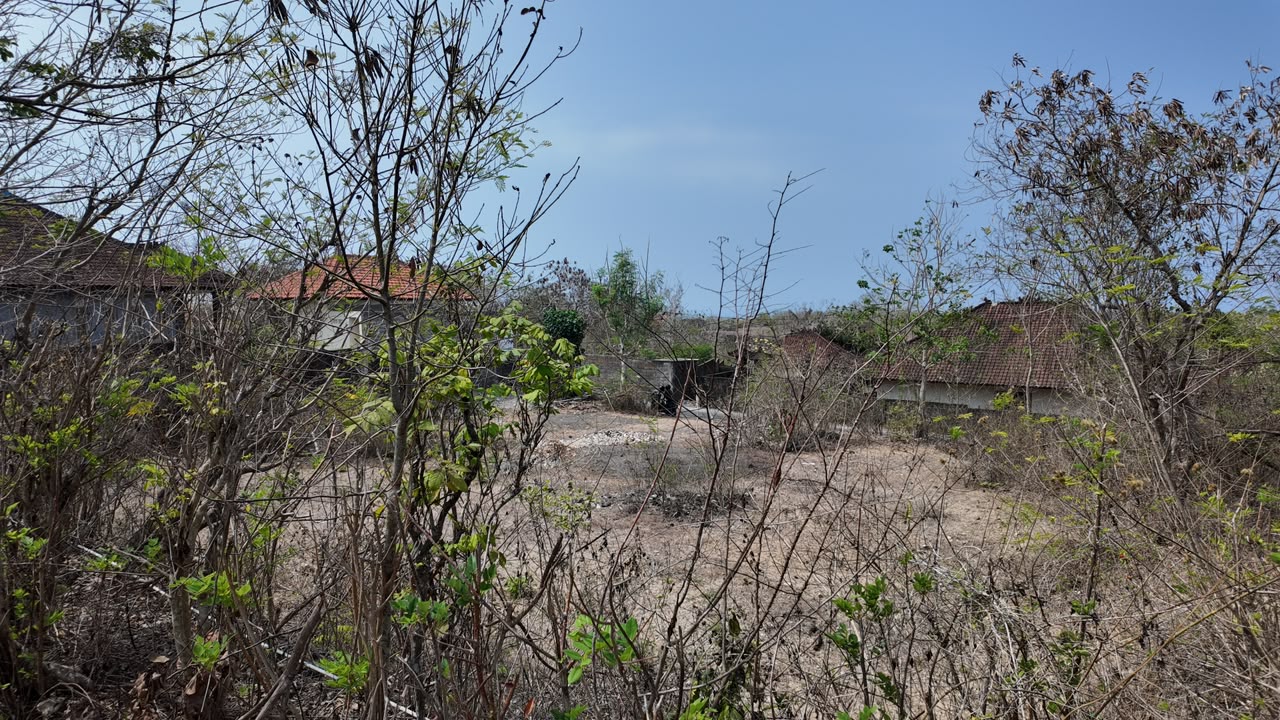
Two plots in Kutuh, minutes apart. One is freehold, 97 are, at Rp 325,000,000 per are. The other is a twenty-five-year lease, 7 are, at Rp 325,000,000 per are. Twenty-five years costs exactly what forever costs.
So the extension clause in that lease is not a detail at the back of the contract — it is most of what the buyer is paying for. And “extendable” in Bali describes three different arrangements, only two of which appear in a statute.
Three different things are sold as “extension”
The word covers a private promise and two statutory procedures with distinct legal definitions. The difference decides what happens in year twenty-six.
| What it is | Legal basis | Who decides | What you hold |
|---|---|---|---|
| Extension clause in a lease (hak sewa / sewa-menyewa) | Law 5/1960, Article 44 — contract terms otherwise | The landowner, or his heirs | A contractual promise |
| Perpanjangan — extension of a registered right | PP 18/2021, Articles 37(1), 52(1) | The Ministry / land office | A conditional entitlement |
| Pembaruan — renewal after expiry | PP 18/2021, Articles 41(2), 56(2) | The Ministry / land office | A two-year window |
Government Regulation 18/2021 on Management Rights, Land Rights, Strata Units and Land Registration (promulgated 2 February 2021, State Gazette 28/2021, Supplement 6630) governs both, and repealed PP 40/1996 and PP 103/2015, which much of the market still quotes. Article 1(7): perpanjangan is added time “tanpa mengubah syarat-syarat dalam pemberian hak tersebut” — without changing the conditions of the original grant. Article 1(8): pembaruan is added time after the period has ended, or before an extension ends. One continues your right; the other gives you a new one.
The statutory ladder, and the five tests on every rung
For the registered rights behind most foreign-held villas the periods are fixed. Hak Guna Bangunan (right to build), Article 37(1): up to 30 years, extension up to 20, renewal up to 30. Hak Pakai with a term, Article 52(1): the same 30, 20 and 30. Hak Guna Usaha, Article 22(1): 35, 25 and 35. Article 49(2) lists Orang Asing among those who may hold a time-bound Hak Pakai; the ownership structures are set out in foreign land ownership in Bali. Note the wording throughout: paling lama, at most. Each figure is a ceiling, not a default.
The ladder is also conditional. Article 40(1) for HGB, and Article 55(1) in identical terms for Hak Pakai, allow extension or renewal only on the holder’s application and only if five conditions are met:
- the land is still properly used in accordance with the nature and purpose of the grant;
- the conditions of the grant have been properly observed by the holder;
- the holder still qualifies as a holder of that right;
- the land still conforms to the spatial plan; and
- the land is not used or planned for a public purpose.
The fourth is the one that moves. A plan can be redrawn under you between grant and extension, and conformity is tested when you apply, not when you bought — which is why the detailed plan behind a plot is worth checking before the plot, the subject of Bali land zoning explained. Where the land sits on another party’s management right, Articles 40(2) and 55(2) add a sixth condition: that holder’s consent.
The deadline that has no appeal
Ministerial Regulation ATR/BPN 18/2021 on Procedures for Determining Management Rights and Land Rights (signed 29 April 2021, promulgated 27 October 2021, State Bulletin 1202/2021) governs filing. Article 26(2) is one sentence: “Dalam hal permohonan berupa Perpanjangan Hak Atas Tanah maka hanya dapat diterima sepanjang jangka waktu Hak Atas Tanah belum berakhir.” An extension application can be accepted only while the right has not yet expired.
There is no grace period and no late filing. PP 18/2021 Articles 41(1) and 56(1) say an extension may be applied for once the land is in use for its granted purpose, and at the latest before the term runs out. Miss that date and extension is gone as a category; what remains is renewal, which Articles 41(2) and 56(2) cap at two years after expiry.
Miss both and Article 2(3) classifies the land as Tanah Negara — state land — the same result appearing at Article 11 of the ministerial regulation, with Article 47(2) handing reallocation to the Minister. The former holder is not left with a right: Article 37(4) says priority “dapat diberikan” to him, weighed against continued proper use, the public interest, the environment and the surrounding community. Dapat is permissive. That is the whole distinction — up to the expiry date you hold a conditional entitlement; one day after it you hold an application, and a discretionary preference at best. Extensions and renewals must themselves be registered at the land office under Article 41(5).
A 25-year lease is not on that ladder at all
Here the Bali market diverges from the statute. Every leasehold plot in our own catalogue is sold on a 25- or 30-year term, and those numbers correspond to nothing in PP 18/2021. They are contract terms, because what is being sold is hak sewa untuk bangunan — the right of lease for building purposes — under Article 44(1) of Law 5/1960, the Basic Agrarian Law (24 September 1960, State Gazette 104/1960, Supplement 2043, still in force). Article 45 lists a foreigner resident in Indonesia among those who may hold it, and Article 44(2) allows rent to be paid in a lump sum, before or after use — which is how a 25-year lease comes to be paid as one price up front. That single sum is also the base for how a Bali lease is taxed, which works out quite differently from a purchase.
Two consequences follow, both against the buyer. First, the Basic Agrarian Law sets no maximum term for hak sewa and no extension procedure for it; Article 50(2) leaves further rules to implementing legislation. So “25 + 25” is not 25 years with a statutory right to 25 more. It is 25 years plus a promise from a private person about the year 2051 — enforceable against him and his heirs as a contract, with no land office in the loop, no five conditions, and no filing deadline because there is no procedure to file into. It is worth the counterparty, the drafting and the notarial record, and no more. What the certificate shows, and who holds the authoritative copy, is in the Bali land certificate check.
Second, the shortcut that claims to solve this — freehold in an Indonesian name, economics with the foreigner — is void by operation of law rather than merely risky. Article 26(2) makes any sale, exchange, gift or bequest intended to transfer hak milik directly or indirectly to a foreigner “batal karena hukum dan tanahnya jatuh kepada Negara”: void, with the land falling to the State. The same article adds that payments already received by the owner cannot be reclaimed. The tenure comparison done properly is in leasehold or freehold in Bali.
What the price already tells you about the term
The clearest evidence that the term is the asset sits in the asking prices. Converted at the Bank Indonesia JISDOR reference rate of Rp 17,986 per US dollar for 21 October 2026, the six leasehold plots live as this is written price out like this:
| Area (district) | Term | Size | Per are (IDR) | Per are per year (IDR) | Per are per year (USD) |
|---|---|---|---|---|---|
| Ubud / Tampaksiring (Gianyar) | 25 years | 7 are | 125,000,000 | 5,000,000 | 278 |
| Ubud / Tampaksiring (Gianyar) | 25 years | 7 are | 137,500,000 | 5,500,000 | 306 |
| Kemenuh (Sukawati, Gianyar) | 25 years | 5 are | 150,000,000 | 6,000,000 | 334 |
| Kutuh (Kuta Selatan, Badung) | 25 years | 7 are | 325,000,000 | 13,000,000 | 723 |
| Kutuh (Kuta Selatan, Badung) | 25 years | 15 are | 325,000,000 | 13,000,000 | 723 |
| Kutuh (Kuta Selatan, Badung) | 30 years | 10 are | 390,000,000 | 13,000,000 | 723 |
The last three rows are the point. Three Kutuh plots; one priced 20% higher per are than the others, and the premium is exactly the ratio of 30 years to 25. Per are per year all three sit at Rp 13,000,000. The market is not pricing land here, it is pricing land-years at a flat rate, and the 30-year plot on the main road costs more because it holds five more of them.
Which returns us to the opening: that same Rp 325,000,000 per are buys 25 years in Kutuh, or the freehold of the 97-are plot outright at Rp 31,525,000,000, about US$1.75 million. If renewing those 25 years costs anything like the first 25, a lease priced at parity with freehold only makes sense on a plan that ends before the term does. The costs stacked on top of any asking price are in Bali land price per are: the full cost.
The numbers we don’t quote
- What an extension costs the state. Articles 26(4) and 27 of the ministerial regulation require a non-tax state revenue charge before the file proceeds, but the phrase uang pemasukan does not appear in the part we could read, and no regulation fixing the amount is named there. We will not publish a percentage we cannot cite.
- How long a land office takes to decide. We found no decision deadline for HGB or Hak Pakai extensions in the text we read. Service standards differ by office.
- What renewing a 25-year lease will cost in 2051. Nobody knows, and that is the finding rather than a gap: no formula, no index, no statutory ceiling — only the clause.
- What happens to the villa when a right expires. No article we read states the fate of buildings after an HGB ends; Article 42(6) only requires the holder to hand the land back.
- Article 185 of the ministerial regulation, widely referenced in summaries of foreign land holding. Neither official PDF we fetched rendered text that far, so we have not relied on it.
The method that survives all of this is short. Establish which right is actually being sold: a registered Hak Pakai or HGB, or a contractual lease. If it is registered, diary the expiry date and apply before it, because Article 26(2) admits nothing afterwards. If it is a lease, read the extension clause as the main commercial term, price it against the freehold per are, and ask who will be bound to honour it. Every plot in our Bali land for lease listings states its term on the card, which is where that comparison starts.
Read next
- Leasehold or freehold in Bali — the tenure comparison in full, and which one a given plan actually calls for.
- Bali land zoning explained — the spatial-plan conformity that Article 40(1) tests again at every extension.



Join The Discussion