
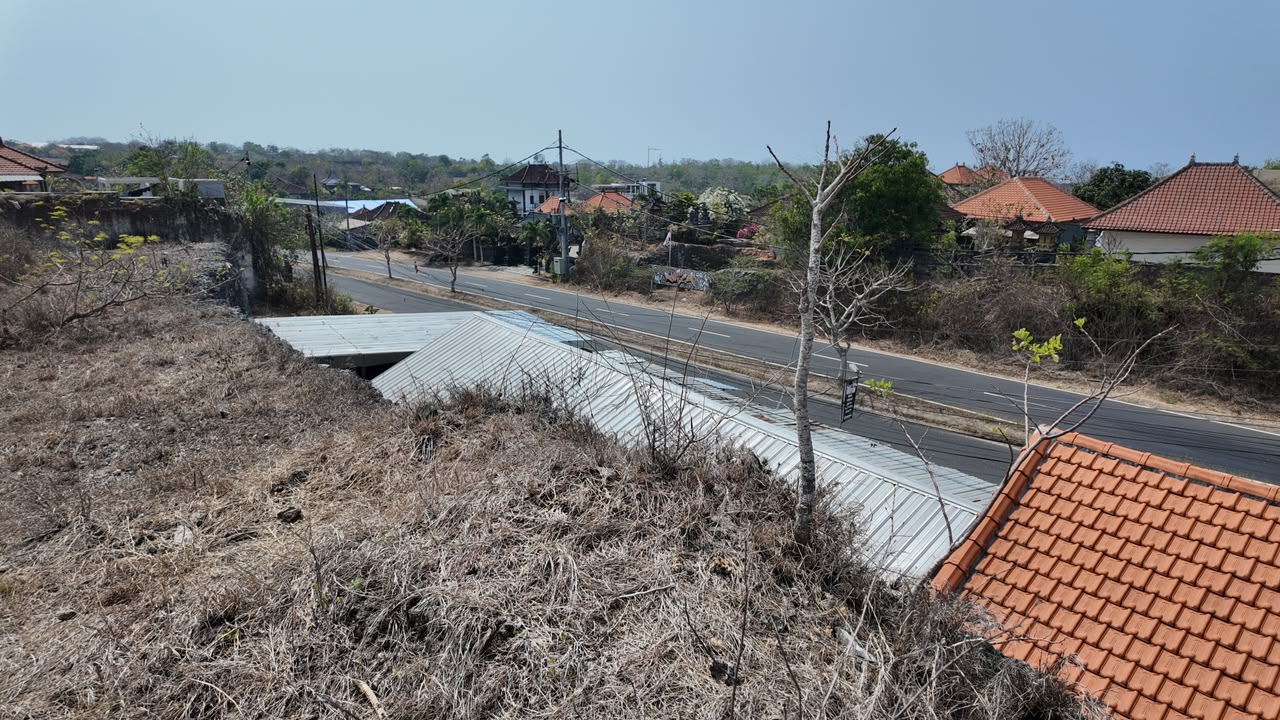
Two plots on this site sit eleven kilometres apart and are governed by different detailed plans, written by different regencies, in different years. Nothing on either certificate says so. Zoning in Bali is not a property of the land — it is a property of a document about the land, and that document is not the one the seller hands you.
Here is the stack: which plan governs your plot, how to read it before you pay, which permission turns a zone into a right to build, and which overlays outrank the zone. The register side of diligence is separate, in the Bali land certificate check.
Four documents decide what you can build, and only one is local
Indonesian spatial law runs top-down. Law 26/2007 on Spatial Planning (26 April 2007, State Gazette 68/2007) sets the frame. Below it, Perda Provinsi Bali 2/2023 on the Bali Spatial Plan 2023–2043 (9 March 2023, Bali Regional Gazette 2/2023), which displaced the 2009 plan the market still quotes. Below that, each regency’s RTRW. And below that — the only layer with parcel-level answers — the RDTR, enacted not by a Perda but by a regent’s regulation.
The RDTR is where a plot stops being “land near Uluwatu” and becomes a subzone with a permitted-use list and intensity figures. Bali had 24 enacted RDTRs on the provincial spatial-planning agency’s index (tarubali.baliprov.go.id, data of 11 July 2024), spread unevenly: six in Badung, five in Denpasar, four in Gianyar, none in Klungkung. The boundaries are administrative, not commercial:
| Area (district) | Governing RDTR | Tenure | Per are (IDR) | Per are (USD) |
|---|---|---|---|---|
| Ubud (Kec. Ubud, Gianyar) | Perbup Gianyar 7/2023 | Leasehold | 125,000,000 | 6,924 |
| Ubud (Kec. Ubud, Gianyar) | Perbup Gianyar 7/2023 | Leasehold | 137,500,000 | 7,617 |
| Kemenuh (Kec. Sukawati, Gianyar) | Perbup Gianyar 24/2023 | Leasehold | 150,000,000 | 8,309 |
| Nusa Dua (Kec. Kuta Selatan, Badung) | Perbup Badung 59/2021 | Freehold | 260,000,000 | 14,403 |
| Kutuh (Kec. Kuta Selatan, Badung) | Perbup Badung 59/2021 | Leasehold | 325,000,000 | 18,004 |
| Kutuh (Kec. Kuta Selatan, Badung) | Perbup Badung 59/2021 | Leasehold | 390,000,000 | 21,604 |
| Balangan, Jimbaran (Kec. Kuta Selatan, Badung) | Perbup Badung 59/2021 | Freehold | 625,000,000 | 34,622 |
| Melasti, Ungasan (Kec. Kuta Selatan, Badung) | Perbup Badung 59/2021 | Freehold | 792,000,000 | 43,873 |
Converted at the Bank Indonesia JISDOR reference rate of Rp 18,052 per US dollar for 16 October 2026, used throughout. These are the nine listings live at the time of writing, not a market average; the costs stacked on top of the asking price are in Bali land price per are: the full cost.
Note the third row. That plot is marketed as Ubud — everyone markets Kemenuh as Ubud — but Kemenuh is a village in Kecamatan Sukawati, listed at Pasal 4(3)(i) of Perbup Gianyar 24/2023, the Sukawati RDTR 2023–2043 (25 May 2023). The Ubud RDTR, Perbup Gianyar 7/2023 (28 February 2023, Berita Daerah Gianyar 7/2023), covers eight units at Pasal 3(2): Lodtunduh, Mas, Singakerta, Peliatan, Sayan, Kedewatan, Petulu and Kelurahan Ubud. Kemenuh is not among them. Check the Ubud plan for a Kemenuh plot and you have read the wrong document.
Reading the plan yourself, for nothing
You need neither the seller’s permission nor a consultant. Article 60(a) of Law 26/2007 gives every person the right to “mengetahui rencana tata ruang” — to know the spatial plan; 60(d) and 60(e) add the right to object to non-conforming development and to sue for cancellation of a non-conforming permit.
- GISTARU RDTR Interaktif — the Ministry of Agrarian Affairs and Spatial Planning publishes enacted detailed plans as an interactive map at gistaru.atrbpn.go.id/rdtrinteraktif. Find the parcel, read the subzone. Free.
- Informasi Tata Ruang — the Bali agency runs a spatial-data request service at tarubali.baliprov.go.id, with the RTRW annexes (Lampiran I–XII) where provincial overlays sit.
- The regency one-stop office — the binding answer for a named parcel, because the regency wrote the RDTR.
Read the subzone, then the intensity rules attached to it: KDB (building coverage), KLB (floor area), KDH (green area). Pasal 36(2) of the Ubud RDTR requires the conformity document itself to state the KDB, the KLB and the building provisions — so those figures exist at parcel level and are obtainable in writing, not negotiable on site.
KKPR: the paper that turns a zone into permission
Since 2021 the old location permit is gone. What exists is Kesesuaian Kegiatan Pemanfaatan Ruang — conformity of the intended activity with the plan — run under Ministerial Regulation ATR/BPN 13/2021. It comes in two forms, and the plan decides which you get:
| Form | Issued when | Basis | Validity |
|---|---|---|---|
| Konfirmasi KKPR | An RDTR exists and is integrated with the OSS system | Article 6(1); Article 25 non-business | 3 years, Article 9(3) |
| Persetujuan KKPR | No RDTR, or an RDTR not yet in OSS | Article 10(1); Article 29 non-business | 3 years, Article 15(3) |
Three things people miss. An enacted RDTR is not enough for the quick route: Article 6(1) ties confirmation to an RDTR “yang telah terintegrasi dengan Sistem OSS”, so a regency can have its plan on the books and still send you down the longer path. The regulation expects you to apply before owning anything — Article 34(1) covers applicants who have not yet acquired the land. And private residential use sits in the non-business track: Article 24(2)(a) names rumah tinggal pribadi.
Together those describe the only sane sequence: establish conformity, then buy. Where a seller will not wait, the fallback is a conditional contract, with the deposit released on a KKPR in your intended use — not on an assurance that villas are allowed around here. Through a company the application runs via OSS under Article 5(2); the ownership routes are in foreign land ownership in Bali.
Four overlays that outrank the zone
| Overlay | Rule | Source |
|---|---|---|
| Coastal setback | Minimum 100 m inland from the highest tide line; narrower only on disaster-prone coast, under a disaster building code | Presidential Regulation 51/2016, Article 1(2); exception Article 21 |
| Building height | Maximum 15 m above ground level, province-wide | Perda Bali 2/2023, Pasal 100(2); exceptions 100(4) |
| Tourism-zone intensity | Height to 15 m, KDB to 50%, parking from 20% of floor area | Perda Bali 2/2023, Pasal 95 |
| Sacred area around temples | A protected radius, delineated by area rather than a stated distance | Perda Bali 2/2023, Pasal 1(46), Pasal 33 |
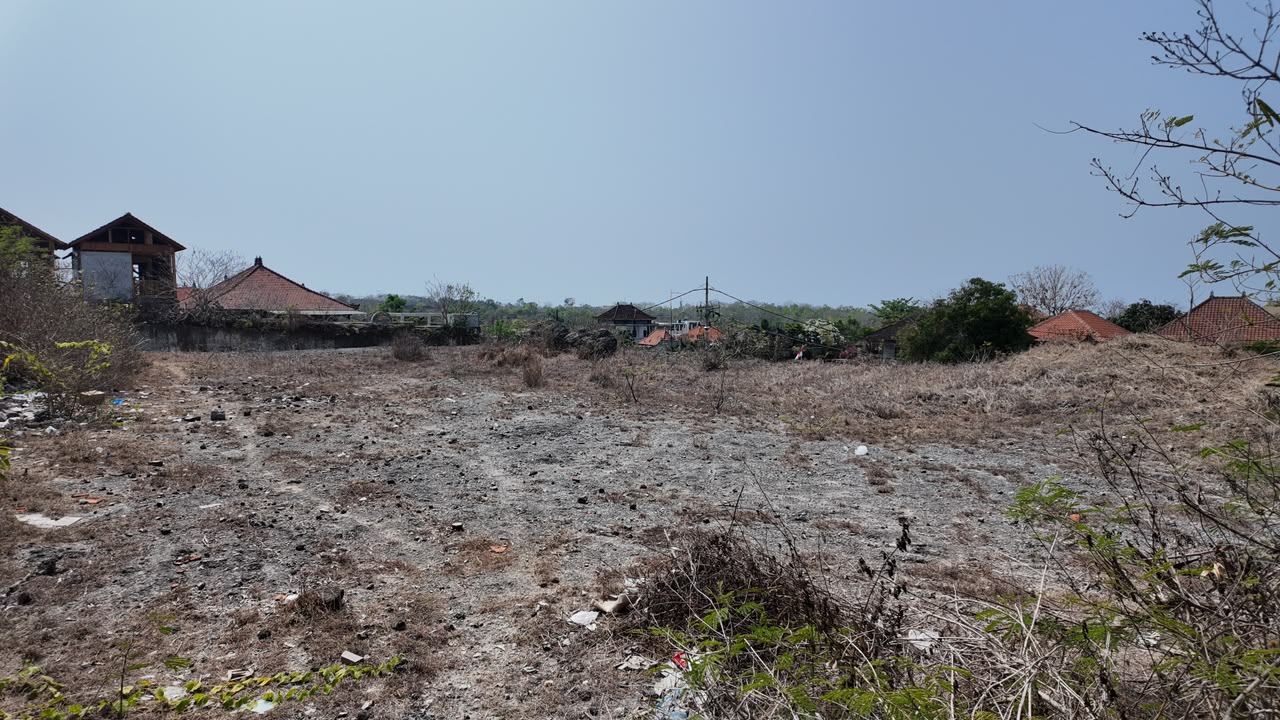
The 100 m setback is national, not Balinese, and Article 2 of Presidential Regulation 51/2016 requires it written into the provincial and regency plans — so a plot can show a permitted tourism subzone and still be unbuildable across its seaward strip. The 15 m cap has a real exception list at Pasal 100(4) — aviation, worship, defence, disaster, telecoms, power, hospitals to five floors — none of it a villa. The Bukit plots and the 53-are freehold at Melasti are the clifftop coastal land where both do most work on a design.
LP2B, and what breaking the plan costs
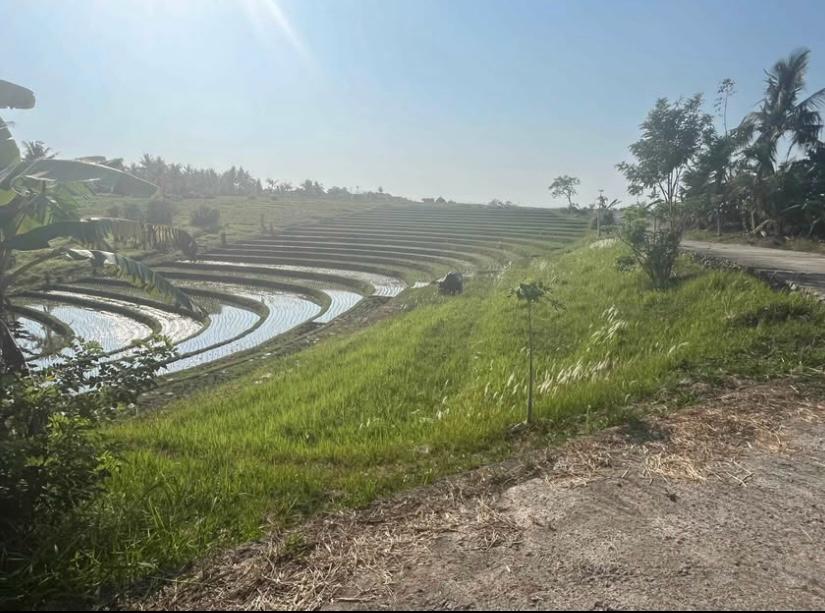
The overlay that destroys a budget outright is agricultural protection. Law 41/2009 on the Protection of Sustainable Food Agricultural Land (14 October 2009, State Gazette 149/2009) makes designated LP2B land protected and, at Article 44(1), “dilarang dialihfungsikan” — conversion prohibited. Article 44(2) permits it only in the public interest, on the four conditions at 44(3): a strategic feasibility study, a conversion plan, release of the owner’s rights, replacement land — priced by Article 46(1) at three times the area for irrigated land, twice for reclaimed swamp, once for dry land.
Designation happens in the plans — Article 19(1) in the regency plan, Article 20(1) in the detailed plan. For Bali, Pasal 104(1)–(2) of Perda 2/2023 confirms the sustainable-agriculture area exists in every regency and city, repeats that designated LP2B may not be converted, and maps it in Annex XVI. Rice terraces in Gianyar and Tabanan are the obvious cases, but “obvious” is the wrong test: read the annex, not the view.
The penalties are criminal, not administrative. Article 72(1) of Law 41/2009 carries up to five years and a fine to Rp 1,000,000,000 — about US$55,400 at the rate above — for converting LP2B; 72(2) up to three years and Rp 3,000,000,000 for failing to restore it, which Article 50(2) requires. Separately, Article 69(1) of Law 26/2007 punishes use of space contrary to the plan where it changes that space’s function: up to three years and a fine to Rp 500,000,000, roughly US$27,700, beside a stop order and demolition. Measure that against the cheapest whole plot we list, the 5-are river-view leasehold in Kemenuh at Rp 750,000,000: the fine alone can exceed the land. Checking the plan costs a morning.
The numbers we don’t quote
- Which Bali RDTRs are integrated with OSS. It decides whether you get a confirmation or an approval under Articles 6(1) and 10(1). National announcements have named Bali plans only in batches; no current per-RDTR list for Badung or Gianyar is published where we can check it. Ask the regency office, in writing.
- The temple sanctity radius in metres. Perda Bali 2/2023 says “radius tertentu” at Pasal 1(46) and delineates sacred areas in hectares at Pasal 33. The familiar five- and two-kilometre figures come from the 1994 Bhisama of the Hindu council — religious guidance, not a regulation.
- Cliff setback distances. Widely quoted for Bali; we could not locate them in an article of the provincial Perda, so the number stays out until we can cite it.
- How many hectares of Bali are designated LP2B. Pasal 104 states no figure; the extent lives in Annex XVI as a map.
- How long a KKPR takes in Badung or Gianyar. Service standards differ by office, and we are not going to average them and call it Bali.
What survives is a complete method: identify the district, identify its RDTR, read the subzone and its intensity figures, check the coastal, height, sacred-area and LP2B overlays, then get the conformity document in your intended use before you pay. Every plot in our catalogue of Bali land for sale names its district, which is where that sequence starts.
Read next
- Bali land certificate check — the register side: which four records exist, who holds the authoritative copy, what each check costs.
- What it costs to build a villa on your own land in Bali — where KDB, KLB and the height cap turn into a construction budget.
