
Every land listing in Bali quotes a rate per are, and almost none of them quote what you will actually transfer. The gap is not a scam; it is a convention. But it is between eight and twelve per cent on a purchase, and on a lease it hides a tax that many buyers only discover when someone asks who has been paying it.
Why the price is per are
An are is 100 square metres. Bali land is quoted in ares because plots are irregular and the unit makes them comparable: a 53-are plot is 5,300 m². For freehold the quoted rate is per are outright. For a lease it is per are per year, which is why a lease headline looks cheap next to a freehold one and is not.
Indonesian law requires prices to be quoted in rupiah — Law No. 7 of 2011 on currency. A dollar figure alongside is a courtesy, not the price, and the exchange rate it was calculated at should always be stated. If a listing gives you only a dollar number, ask what rate was used and on what date.
A freehold purchase: what sits on top
BPHTB — the land acquisition duty. Paid by the buyer, at a maximum of 5% under Law 1/2022 on regional taxes. The exact rate and the tax-free threshold are set by each regency’s own regulation, so Badung, Gianyar and Tabanan do not have to match. We quote 5% as the ceiling and ask the notary for the local figure rather than publishing a threshold we have not verified in the regency’s own text.
The notary. A land transfer has to go through a PPAT — a land deed official — not just any notary, and the PPAT must be authorised for the sub-district the land sits in. Market practice is roughly 1% to 2.5% of the transaction. Ours charges 0.5%, which is not generosity: we bring him deals regularly and the documents reach him already checked.
Due diligence and survey. Verifying the certificate at the land office, confirming the heirs, pulling the zoning designation, and having a licensed surveyor stake the boundaries. Budget this as a real line item. It is also the only line item that can save the entire transaction.
The seller’s tax, which is not your tax. The seller pays PPh final of 2.5% of the transaction value on the transfer, under Government Regulation 34/2016. It is worth knowing because it comes up in negotiation: a seller quoting you a “net” price is quoting a price with his 2.5% moved onto you.
A lease: the ten per cent almost nobody mentions
Renting out land or a building in Indonesia carries a final income tax of 10% of the gross rent, under Government Regulation 34/2017, in force since January 2018. “Gross” means everything the tenant pays or owes, service charges included.
Who hands it over depends on who the tenant is. Normally the tenant withholds it. But if the tenant is an individual who is not a designated withholding agent — which is most foreign lessees — the landowner is the one who must pay it. In practice this is settled in the contract, and the number ends up in the price one way or the other. What you should not accept is a lease quoted without anyone saying which side of that line it falls on.
A long-term lease in Bali is a Hak Sewa, built on Articles 44 and 45 of the Basic Agrarian Law. It is worth knowing two things about it before you compare prices. It is not registered at the land office — the title stays with the Indonesian owner and your protection is the notarised contract itself. And there is no statutory maximum term; Bali notaries in practice write no more than thirty years per term, with extensions written in.
The extension clause is a price, not a formality
Two phrases do very different work in a lease. Priority to extend gives you first refusal. Guaranteed extension — jaminan perpanjangan — gives you a right. If the price of the extension is left as “market price at the time” or “to be agreed”, you have bought the first term and an option on a negotiation.
The other clause people skip: what happens to the building you paid to construct. By default it goes to the landowner when the term ends unless the contract says otherwise. And the contract has to bind the owner’s heirs by name, because the owner will not necessarily be alive at the end of a thirty-year lease.
While you hold it, and when you leave
PBB — the annual land and building tax — runs at a fraction of a per cent of the assessed value, typically quoted in the 0.1–0.5% range. The assessed value (NJOP) is usually well below market.
On sale, the 2.5% PPh final applies to the transfer. If the plot is producing rental income, that income has its own treatment, and a foreign owner’s situation depends on residency and on the tax treaty with their home country. This is the point at which a tax adviser costs less than the mistake. Before that conversation it is worth knowing which of these taxes is legally yours, and under which article.
A worked example
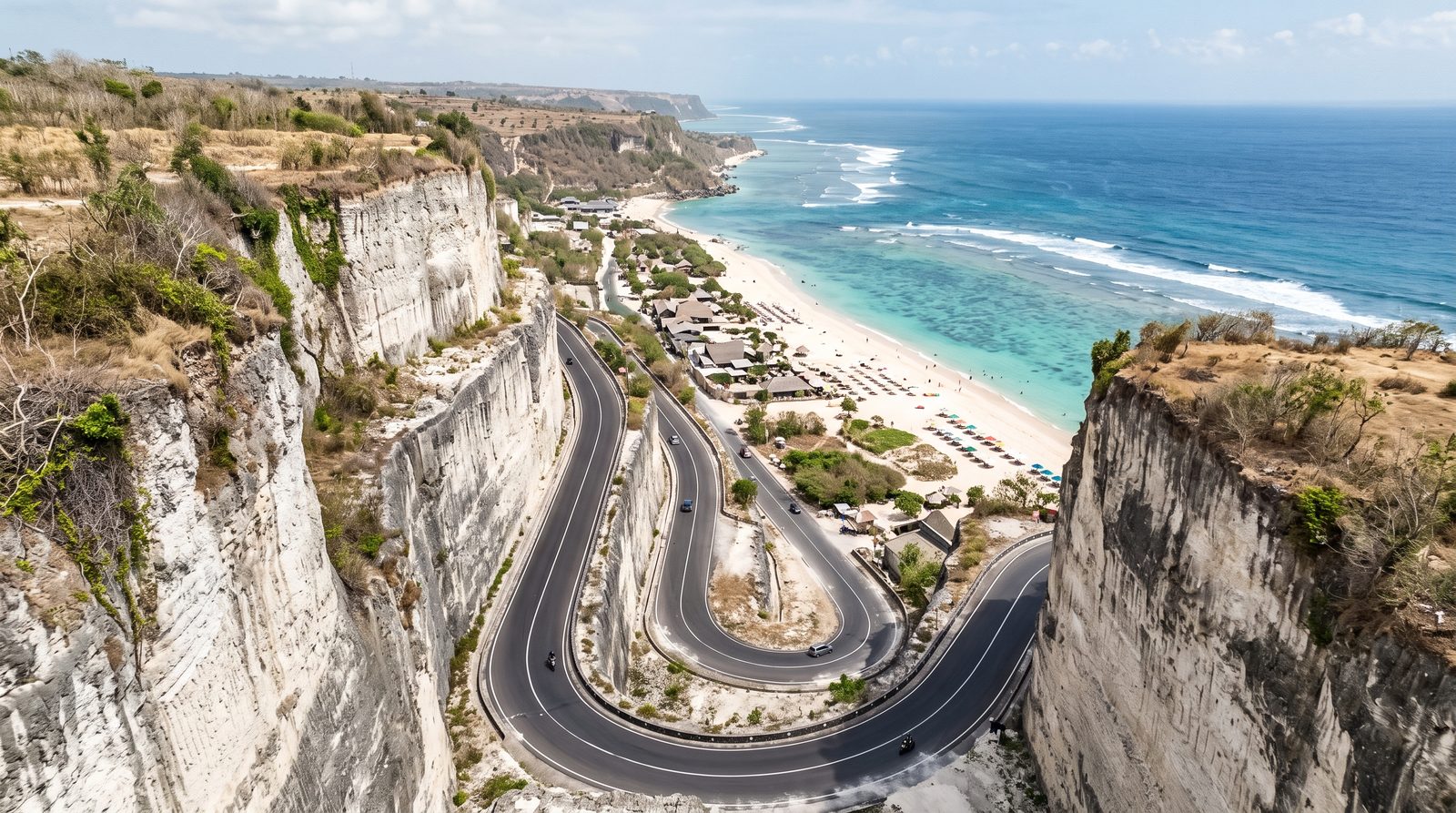
Take a real plot from our catalogue: 53 are of freehold land in Melasti, on the Bukit, at IDR 792 million per are.
- Land: 53 × IDR 792 million = IDR 41.98 billion
- BPHTB at the 5% ceiling, before the local threshold: about IDR 2.1 billion
- Notary at 0.5%: about IDR 210 million
- Due diligence and boundary staking: a low eight-figure rupiah sum
That lands the real cost near IDR 44.3 billion — roughly 5.5% above the headline, before any construction. At an exchange rate of 16,300 the plot alone is about USD 2.58 million; we quote the rate because in six months it will be a different number.
The lesson is not that the extras are large. It is that they are predictable, and that any listing which does not name them is asking you to discover them at the notary’s table.
Numbers we deliberately do not quote
There are figures circulating in Bali property articles that we will not repeat, because we could not verify them in a primary source:
- The BPHTB tax-free threshold. Two national figures circulate and regencies set their own. Ask the notary for the number in your regency.
- A claim that non-resident sellers pay 20% instead of 2.5% on a sale. The regulation on transfer tax does not draw that distinction; the 20% figure appears to come from the separate withholding rule on rental income.
- Criminal penalties attributed to the 2026 regional regulation on farmland. The province’s own portal lists administrative sanctions.
If you see any of those three presented as fact, that is a useful signal about the rest of the page.
How to compare two plots honestly
Convert both to the same shape before you look at them. For freehold: rate per are, times ares, plus acquisition duty, plus notary, plus checks. For a lease: rate per are per year, times ares, times the term, plus the 10% rental tax, plus notary, plus checks — and then ask what the extension costs, because a 25-year lease with an unpriced extension is a 25-year asset, not a 50-year one.
We publish the full amount on every listing for exactly this reason. Send us the coordinates of any plot, ours or not, and we will tell you the zoning designation free of charge.


Join The Discussion